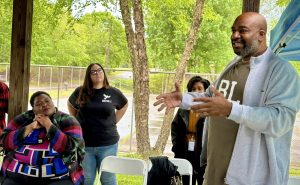
Granville Street Park in Oxford, North Carolina, was once a crucial place for gathering and community. But after the city’s divestment from Oxford’s predominantly Black neighborhoods, the park fell into disrepair. Down Home North Carolina, an organization building a strong pro-democracy base in the pivotal swing state of North Carolina, saw an opportunity. The organization used the process of refurbishing the park to build and deepen relationships with residents – relationships that are critical to building power and building bridges in rural communities.
This is the kind of work that The Heartland Fund (Heartland) was created to support. As the first-of-its-kind fund created to build power for progress in small towns and rural communities across the country, Heartland supports and protects rural areas, expands civic participation and strengthens collaboration to create solutions from the ground up.
“Our mission is really to build power for progress in small towns and rural parts of this country, and in doing so, change what is possible in the country overall.”
executive director
Heartland’s grantees across 26 states work to make sure everyone, no matter who they are, has the information they need to make their voices heard, whether by voting, amplifying local leaders, or advocating for themselves or their neighbors. Heartland’s deep commitment to racial justice fuels this mission, which manifests in its values, grantmaking and research. Half of Heartland’s grantmaking goes to organizations that are led by and work primarily in communities of color.
“A lot of people use “rural” as code for white. And it’s just not true,” explained Sarah Jaynes, executive director of The Heartland Fund. “That does not do justice to rural people, and it doesn’t do justice to all of the people of color who live in rural spaces who often represent the majority of communities,” she said. But Heartland also recognizes that they can’t only build power in communities of color. Real change requires calling in white rural community members to build a more just future for all. “We believe that racial justice is a project for white people,” said Jaynes. “It’s not just funding people of color to organize in communities of color – that’s not the only way to embody racial justice,” she said.
Overcoming divides like this is critical to Heartland’s work. In rural communities, working across the aisle is not only valuable but necessary. “As a rural-first network of organizations, we specialize in being able to build bridges and talk across ideological spaces,” said Jaynes. “Every single one of our groups has to do this because there aren’t base majorities in rural areas. Our organizations are some of the very best persuaders out there,” she said.
To keep its finger on the pulse, Heartland conducts extensive research on rural perspectives and integrates what it learns into its grantmaking and shares it with the field. Heartland recently published survey findings digging into what folks in small towns and rural areas think across a variety of issue areas, from economic values to patriotism. As Jaynes says, “we’re constantly bringing rural communities into the conversation. And we’re breaking myths about what people think they know about rural areas, which is oftentimes incorrect.” To Heartland the work is about shining a light on the parts of our country that have been overlooked and under-resourced for generations. Heartland lifts up local voices when amplifying the work that their grantees are doing to help rural communities thrive to change how people think about these areas.
Through years of experience supporting these organizations on the ground, Heartland knows just how far community organizing goes in helping people become more active members in their communities. An example of this is We the People Michigan. They have been organizing in northern Michigan on a variety of issues, from making drivers licenses more accessible to efforts to support farmers. They found that the folks, who they worked with and reached out to as part of these non-partisan campaigns, were a lot of the same people who turned out for the election, when they hadn’t before. The community building efforts helped more voices be heard – and ensured policy wins that made a difference in local people’s lives.
With the support of the Windward Fund as its fiscal sponsor which includes providing administrative services that are critical to daily operations, The Heartland Fund is able to help these areas build the infrastructure to create social change. Heartland listens to, amplifies and supports voices in rural America – a task essential to our democracy and vital to the health of these areas.